
Case inserts: what’s inside
Biological specimen set embedded in clear plastic
A collection of biological specimens embedded in clear plastic for the study of entomology, botany and animal anatomy.
A set of demonstration models combines specimens encased in transparent plastic: insects with their life cycles and structure, plant specimens and animal skeletons. The material covers entomology, botany, animal anatomy and embryology, making it a visual aid for biology, zoology and botany lessons. The set meets the requirements for equipping biology classrooms in general secondary education institutions according to the current curriculum.
- 1.Insect collection: a variety of species showing insect morphology - 1 pc.
- 2.Arthropod models representing the main classes of arthropods - 1 pc.
- 3.9 species of true bugs: a set of nine species with different anatomy - 1 pc.
- 4.Silkworm life cycle: all stages of development from egg to adult - 1 pc.
- 5.Grasshopper life cycle: stages of development, including egg, nymph and adult - 1 piece.
- 6.Dragonfly life cycle: all stages of development from egg to adult - 1 pc.
- 7.Butterfly life cycle: complete metamorphosis - 1 pc.
- 8.Cicada life cycle: all stages of development from egg to adult - 1 pc.
- 9.Insect wing types and their structure - 1 pc.
- 10.Insect mouthparts: descriptions of the different types - 1 pc.
- 11.Insect antennae: models showing different shapes and types - 1 pc.
- 12.Insect pupae: the main types - 1 pc.
- 13.Insect legs: models showing different limb types - 1 pc.
- 14.Leaf types: a demonstration of different plant leaf shapes and types - 1 pc.
- 15.Algae: examples of different species - 1 pc.
- 16.Mosses: a collection of models for studying moss structure - 1 pc.
- 17.Leaf venation: a demonstration of different venation patterns - 1 pc.
- 18.Inflorescences: models showing the different types found in plants - 1 pc.
- 19.Bean germination: the stages of seed germination - 1 pc.
- 20.Corn germination: the seed germination process - 1 pc.
- 21.Peanut germination: a demonstration of the germination process - 1 pc.
- 22.Pine life cycle: models illustrating the life cycle - 1 pc.
- 23.Chick development: the stages of embryonic development - 1 pc.
- 24.Frog development: all stages from egg to adult - 1 pc.
- 25.Rabbit skeleton: an anatomically detailed model - 1 pc.
- 26.Fish skeleton: a model for studying skeletal structure - 1 pc.
- 27.Rat skeleton: an anatomical model - 1 pc.
- 28.Pigeon skeleton: a demonstration of skeletal structure - 1 pc.
- 29.Bird skeleton: a model for studying anatomy - 1 pc.
- 30.Bat skeleton: a model showing its distinctive adaptations - 1 pc.
- 1. Study of insect morphology on a collection of insects
- 2. Study of representatives of the main classes of arthropods
- 3. Comparison of nine species of true bugs by their external structure
- 4. Study of the silkworm life cycle
- 5. Study of the life cycle of a bush cricket (katydid)
- 6. Study the life cycle of a dragonfly
- 7. Study of the butterfly life cycle and complete metamorphosis
- 8. Study the life cycle of the cicada
- 9. Comparison of insect wing types
- 10. Comparison of types of insect mouthparts
- 11. Comparison of insect antennae types
- 12. Study of types of insect pupae
- 13. Comparison of insect leg types
- 14. Studying the types of plant leaves
- 15. Studying examples of algae
- 16. Study of the structure of mosses
- 17. Comparing types of leaf venation
- 18. Study of types of inflorescences
- 19. Study of bean germination
- 20. Study of corn germination
- 21. Peanut germination study
- 22. Study of the life cycle of pine
- 23. Study of the stages of embryonic development of the chicken
- 24. Study of frog development
- 25. Study of the rabbit skeleton
- 26. Studying the skeleton of a fish
- 27. Study of the rat skeleton
- 28. Studying the skeleton of a pigeon
- 29. Study of the skeleton of a bird
- 30. Studying the skeleton of a bat
Middle school
basic level
Diversity of living organisms. The concept of the kingdoms of living organisms: Bacteria, Protists, Fungi, Plants, Animals. Main groups of animals. Concept of vertebrates and invertebrates
basic level
Autotrophic and mixotrophic protists. General characteristics of algae as photosynthetic organisms. Unicellular (chlorella, chlamydomonas) and multicellular (spirogyra, ulva, kelp) algae. Adaptations of algae to their environment
basic level
Mosses. Distribution and habitat of mosses. Leafy mosses (green and sphagnum): structural features and life processes. The role of mosses in soil waterlogging and peat formation
- — Practical activity 1. Comparing spore-producing plants
basic level
General characteristics of gymnosperms. Distribution, diversity, structure and life processes. Reproduction of gymnosperms. The role of gymnosperms in nature
- — Practical activity 2. Comparing various types of gymnosperms (appearance, shoots, cones and seeds)
basic level
Leaf. Leaf functions: photosynthesis, transpiration and gas exchange. External structure of the leaf. Simple and compound leaves. Leaf venation. Arrangement of leaves on the stem
- — Laboratory activity 5. External structure and identification of simple and compound leaves
basic level
Flower, its structure and functions. Inflorescences: simple and complex, their biological significance. Seed. The structure of seeds of monocotyledonous and dicotyledonous plants. Conditions for seed germination. Nutrition and growth of the seedling
- — Practical activity 5. Types of simple and compound inflorescences
- — Laboratory activity 7. Structure of seeds of monocotyledonous and dicotyledonous plants
basic level
Class Insects. External structure of insects. Organ systems. Reproduction and types of development of insects. Variety of insects. Dragonflies, Orthoptera, true bugs, Lepidoptera, Coleoptera, Hymenoptera, Diptera
- — Practical activity 2. External structure of insects
basic level
Class Actinopterygii (ray-finned fish). Class Chondrichthyes (cartilaginous fish). Variation in external structure according to lifestyle. Adaptations to aquatic life. Organ systems
- — Laboratory activity 2. External adaptations of fish to aquatic life
basic level
Class Amphibia (amphibians). External structure, using the marsh frog as an example. Reproduction and development. Metamorphosis in amphibians
basic level
Class Aves (birds). External structure and plumage. Adaptations of organ systems for flight. Reproduction and development. Structure of a bird’s egg
- — Laboratory activity 3. External adaptations of birds for flight. Structure of bird feathers
basic level
Class Mammalia. External structure. Skin and hair. Organ systems. Diversity of mammals: bats, rodents and others
High school
basic level
Ontogenesis. The concept of ontogenesis. Embryonic and postembryonic development. Human embryonic development. Postembryonic development
advanced level
Ontogenesis. Embryonic period of development and its stages. Postembryonic development and its periods. Direct and indirect development (with complete and incomplete metamorphosis). The concept of life cycle. Simple and complex life cycle
basic level
Macroevolution and its evidence. Comparative anatomical, paleontological, embryological, molecular genetic evidence of evolution
- — Laboratory activity 4. Study of homologous organs and vestigial structures as evidence of evolution
advanced level
Macroevolution and its evidence. Comparative anatomical, paleontological, embryological, molecular genetic evidence of evolution
- — Laboratory activity 5. Study of homologous organs and vestigial structures as evidence of evolution
Other sets in the section "Biology»
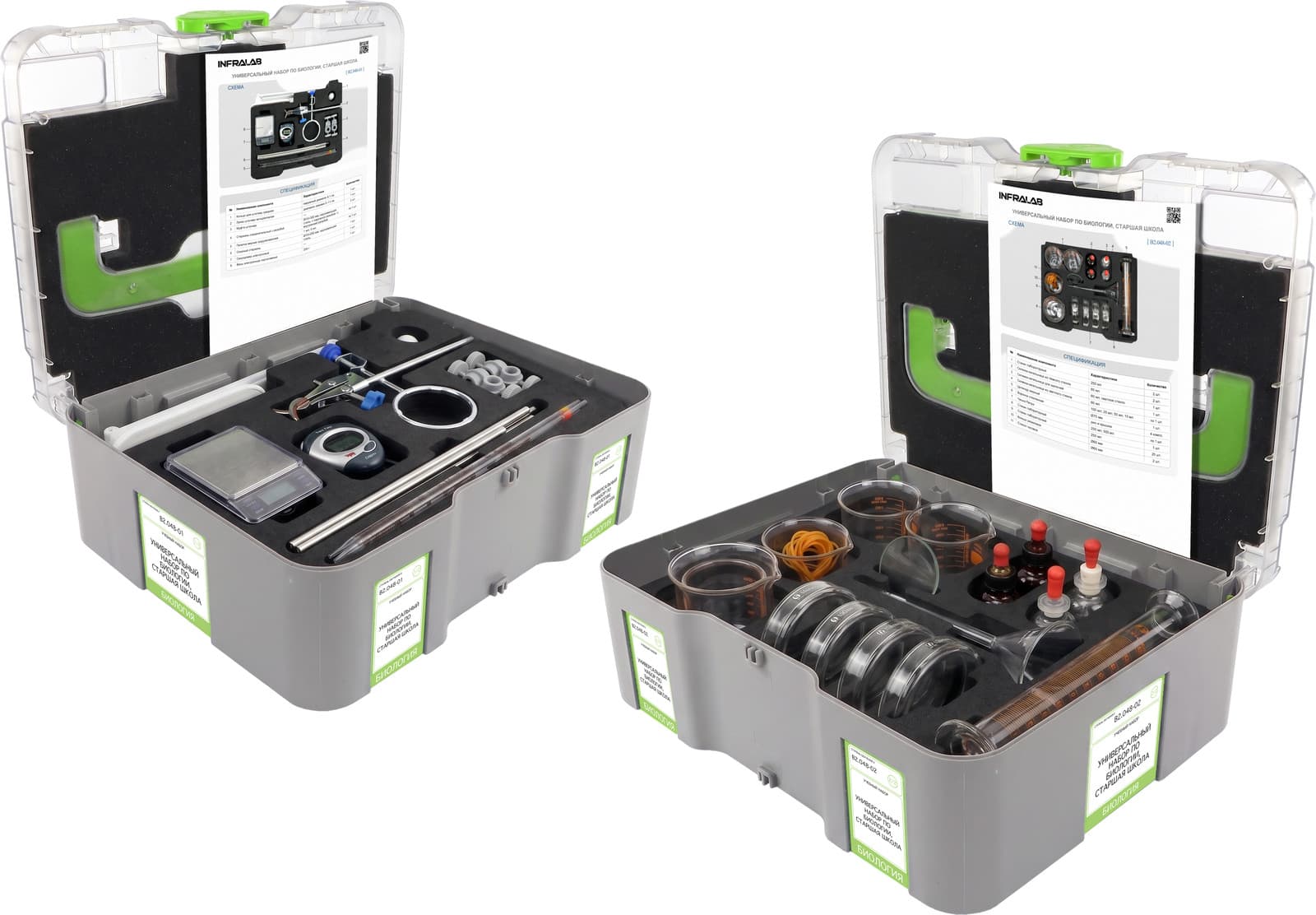
B2.048
Educational kit: General biology, upper secondary school
A universal set of laboratory ware, tools and equipment for the biology classroom in high school: 35 items in two cases, the basis for topic-specific sets.
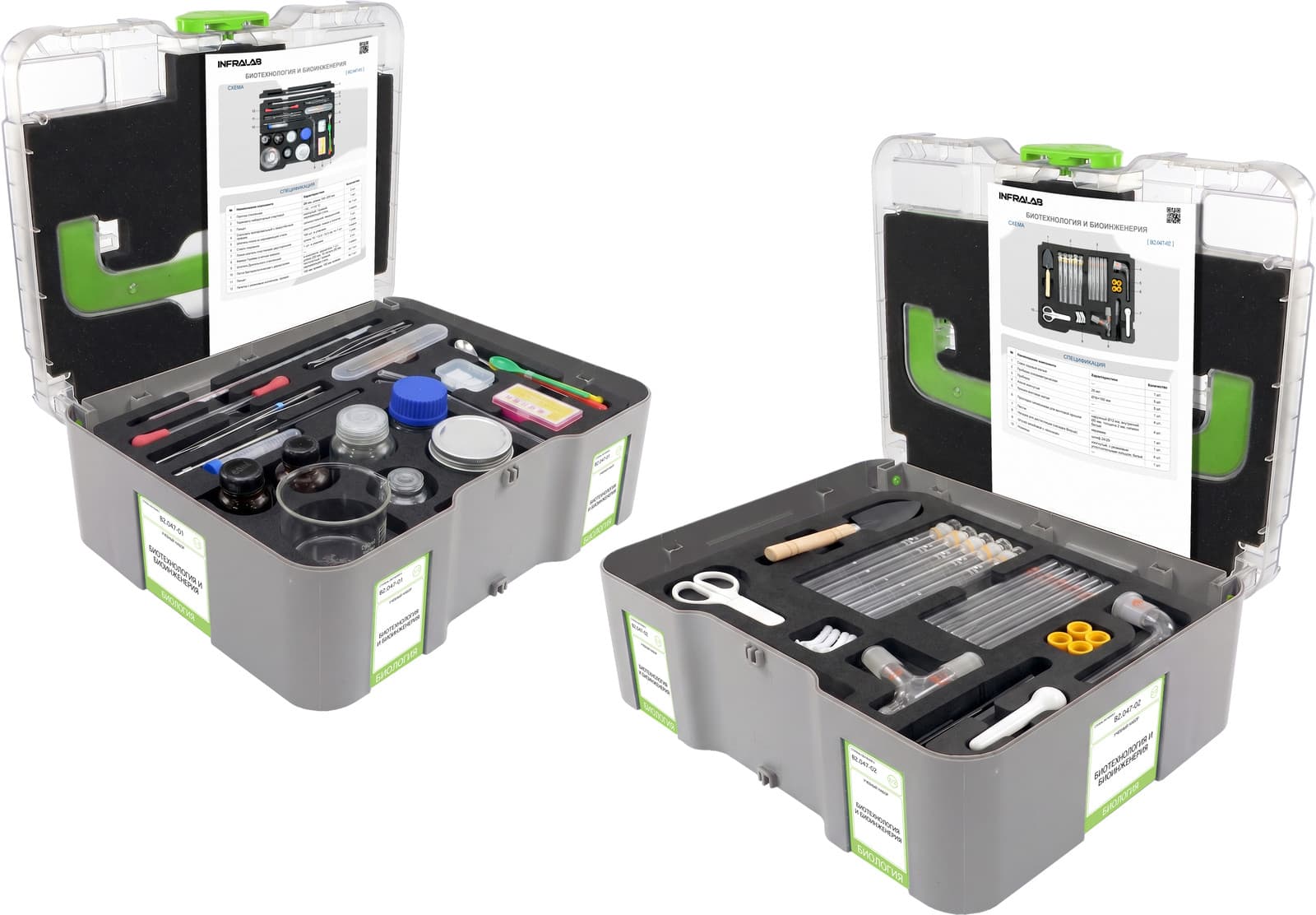
B2.047
Educational kit: Biotechnology and bioengineering
Laboratory set “Biotechnology and Bioengineering” for biology high school: 53 equipment items in two cases, 17 laboratory activities.
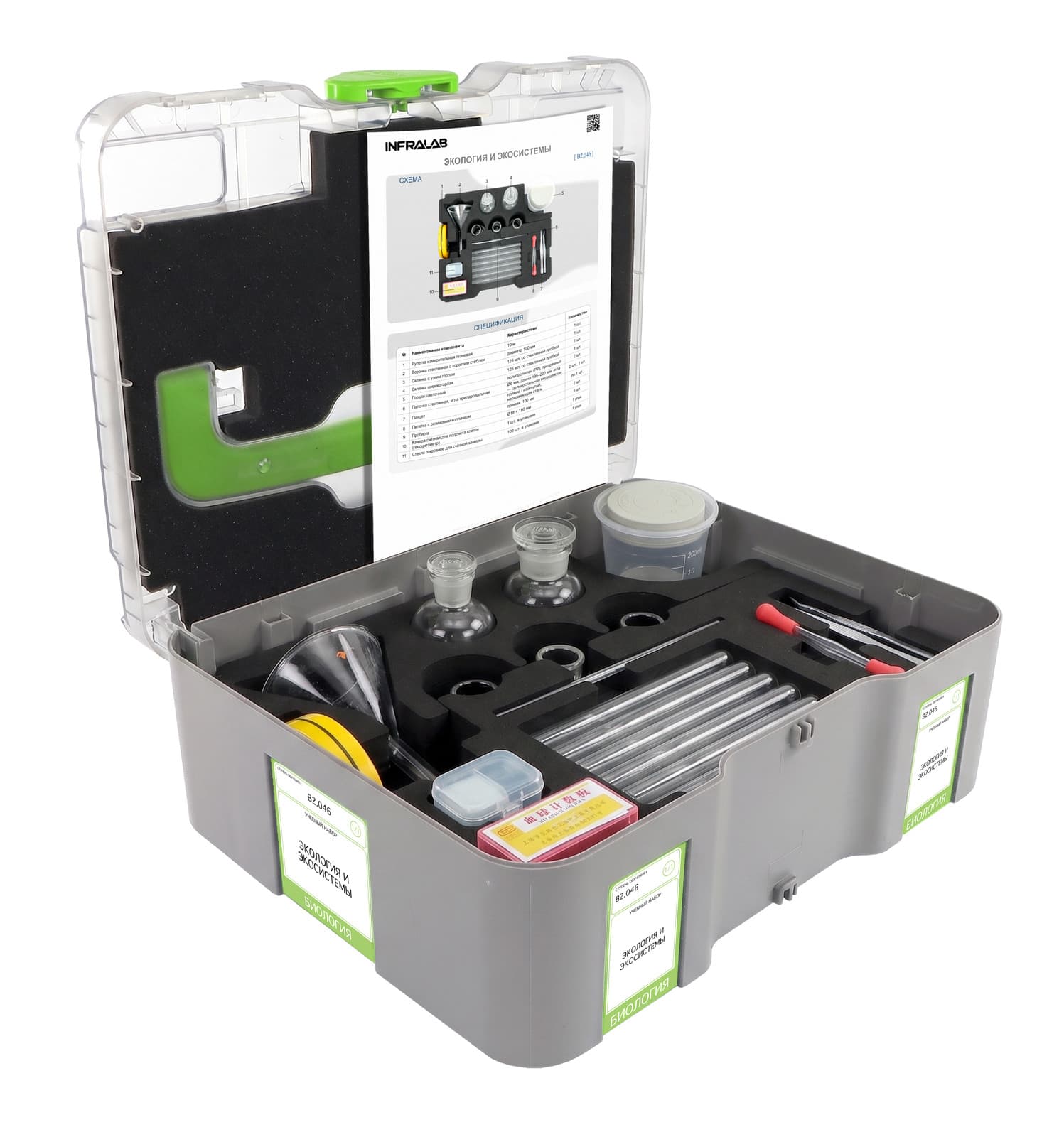
B2.046
Educational kit: Ecology and ecosystems
Laboratory set “Ecology and Ecosystems” for biology high school: 23 equipment items in a case, 5 laboratory activities.
Looking for other equipment?
Tell us which equipment you need and the quantities. We can help you choose suitable items and prepare a quotation.