
Case inserts: what’s inside
Basic biology practical kit
Biology laboratory kit for middle school and high school, with equipment in two cases for approximately seventy practical activities in botany, zoology, anatomy and ecology.
The set combines a laboratory stand, an alcohol lamp, dissecting instruments, laboratory glassware and observation instruments in two cases and covers about seventy laboratory and practical activities in botany, zoology, human anatomy, general biology and ecology. It contains electronic devices - a pH meter and a stopwatch, which allows for both qualitative observations and quantitative measurements. The set is designed for students in middle school and high school and meets the equipment requirements for biology classrooms in general secondary education institutions according to the current curriculum.
- 1.Test tube rack (13 holes for test tubes, 6 holes for pipettes, 7 pins, plastic) - 1 pc.
- 2.Laboratory stand rod Ø10×250 mm, steel - 1 pc.
- 3.Rod with internal thread Ø10×300 mm, M6 thread - 1 pc.
- 4.Rod with external thread Ø10×313 mm, M6 thread - 1 pc.
- 5.Laboratory stand base, detachable body, holes Ø10 mm - 1 set
- 6.bosshead clamp, M6 clamping screws - 2 pcs.
- 7.Laboratory clamp, max. clamp diameter 100 mm - 1 pc.
- 8.Test tube clamp, max. clamp diameter 25 mm - 1 pc.
- 9.Alcohol lamp - 1 pc.
- 10.Combustion spoon (cup Ø20 mm, handle 180 mm) - 1 pc.
- 11.Straight tweezers, steel - 1 pc.
- 12.Straight dissecting needle, length 135±15 mm - 2 pcs.
- 13.Scalpel, steel - 1 pc.
- 14.Wash bottle 250 ml - 1 pc.
- 15.Brush for test tubes (bristles Ø25-30 mm, for test tubes Ø16-20 mm) - 1 pc.
- 16.Laboratory test tube Ø16×160 mm - 6 pcs.
- 17.Glass beaker 250 ml - 1 pc.
- 18.Glass beaker 100 ml - 3 pcs.
- 19.Glass measuring cylinder 100 ml - 1 pc.
- 20.Laboratory glass funnel Ø60 mm - 1 pc.
- 21.Petri dish (base Ø100 mm, lid Ø106 mm) - 1 set
- 22.Dropper bottle 30 ml, glass - 3 pcs.
- 23.Glass pipette 10 cm - 3 pcs.
- 24.Bottle for reagents 30 ml, glass - 3 pcs.
- 25.Ceramic pestle No. 2 - 1 pc.
- 26.Mortar No. 2 ceramic - 1 pc.
- 27.Laboratory wire gauze 12.5×12.5 cm - 1 pc.
- 28.Filter paper Ø110 mm - 1 pack.
- 29.Laboratory stand ring with mount, small, outer diameter 62±5 mm - 1 pc.
- 30.Hand-held aspherical magnifying glass, magnification 3.5× - 1 pc.
- 31.Napkin - 1 pc.
- 32.pH meter, range 0.00–14.00 - 1 pc.
- 33.Electronic stopwatch - 1 pc.
- 34.Plastic tray 24.5×18.5±2 cm - 1 pc.
- 1. Study of laboratory equipment: thermometers, scales, Petri dishes, test tubes, beakers. Rules for working with equipment in the school classroom
- 2. Identification of adaptations of organisms to their environment
- 3. Study of artificial communities and their inhabitants (using the example of an aquarium and other artificial communities)
- 4. Organising a litter clean-up in a nearby forest, park, public square or school grounds
- 5. Study of the external structure of a herbaceous flowering plant (using living or herbarium specimens: shepherd’s purse, wild radish, meadow buttercup and other plants)
- 6. Detection of inorganic and organic substances in the plant
- 7. Study of the structure of rhizomes, tubers, bulbs
- 8. Observation of root growth
- 9. Monitoring shoot growth
- 10. Observation of the process of oxygen release by aquarium plants in the light
- 11. Investigating how loosening the soil affects root respiration
- 12. Study of the structure of unicellular algae (using the example of Chlamydomonas and Chlorella)
- 13. Study of the external structure of angiosperms
- 14. Study of the characteristics of representatives of the families Brassicaceae (Cruciferae), Rosaceae (rose family), Fabaceae (legume family), Solanaceae, Asteraceae (Compositae), Liliaceae and Poaceae (grass family), using herbarium and actual specimens
- 15. Identification of plant species (using the example of three families) using plant identification guides or identification cards
- 16. Studying the structure of the fruiting bodies of cap mushrooms (or studying cap mushrooms using models)
- 17. Study of the structure of lichens
- 18. Exploring structures used for support and movement in animals
- 19. Study of methods of food intake in animals
- 20. Study of breathing methods in animals
- 21. Exploring organ systems that transport substances in animals
- 22. Study of sense organs in animals
- 23. Formation of conditioned reflexes in aquarium fish
- 24. Study of hydra feeding on daphnia and cyclops (school aquarium)
- 25. Study of adaptations of parasitic worms to parasitism (using prepared fluid-preserved specimens and microscope slides)
- 26. Exploring different types of insect development using specimen collections
- 27. Study of the external structure of freshwater and marine mollusc shells (Anodonta and Unio mussels, pond snails, ramshorn snails and others)
- 28. Study of the external structure and characteristics of the movement of fish (using the example of live fish in a jar of water)
- 29. Study of the internal structure of fish (using the example of a prepared fluid-preserved specimen)
- 30. Study of the external structure and plumage of birds (using mounted bird specimens and a set of contour feathers, semiplumes and down)
- 31. Study of the characteristics of the mammalian dental system
- 32. Study of fossil remains of extinct animals
- 33. Study of changes in pupil size depending on illumination
- 34. Study of bone properties
- 35. Determination of spine flexibility
- 36. Measuring the mass and height of your body
- 37. Study of the influence of static and dynamic load on muscle fatigue
- 38. Detection of poor posture
- 39. Determination of signs of flat feet
- 40. Providing first aid for skeletal and muscle injuries
- 41. Blood pressure measurement
- 42. Determination of pulse and heart rate in humans at rest and after a measured amount of exercise
- 43. First aid for bleeding
- 44. Measuring chest circumference during inhalation and exhalation
- 45. Determination of respiratory rate. The influence of various factors on breathing rate
- 46. Study of food composition
- 47. Planning a menu based on the energy content of foods
- 48. Ways to preserve vitamins in foods
- 49. Description of measures to prevent kidney disease
- 50. Description of the main measures for the prevention of infectious viral diseases: AIDS and hepatitis
- 51. Determination of visual acuity in humans
- 52. Study of the structure of the organ of vision (using a model and a fluid-preserved specimen)
- 53. Study of short-term memory
- 54. Determination of rote and logical memory capacity
- 55. Assessment of the development of logical thinking skills
- 56. The use of various methods in the study of biological objects
- 57. Study of the action of the enzyme catalase
- 58. Study of the structure of plant, animal and bacterial cells under a microscope using ready-made microscope slides and their description
- 59. Study of the results of monohybrid and dihybrid crossing in Drosophila on prepared microscope slides
- 60. Study of environmentally induced variation; construction of a ranked data series and a variation curve
- 61. Analysis of mutations in Drosophila on prepared microscope slides
- 62. Compilation and analysis of human pedigrees
- 63. Comparing species using morphological criteria
- 64. Description of an organism’s adaptations and their relative nature
- 65. Study of fossil remains of plants and animals in collections
- 66. Morphological characteristics of plants from different habitats
- 67. The influence of light on the growth and development of coleus cuttings
- 68. Calculating the population density of different plant species
Middle school
basic level
Methods of studying living things. Observation and biological experiments. Magnifying instruments. Magnifying glass. Microscope. Microscope slides
- — Laboratory activity 1. Magnifying instruments (magnifying glass and microscope) and how to use them.
- — Laboratory activity 2. Preparing temporary microscope slides.
basic level
The structure of plant and animal cells. Diversity of cells
- — Practical activity 1. The structure of plant and animal cells.
basic level
Plants. Photosynthesis is a method of plant nutrition. Fungi. Introduction to cap mushrooms
basic level
Reproduction methods. Asexual reproduction (vegetative reproduction). Sexual reproduction
- — Laboratory activity 3. Vegetative propagation of plants.
basic level
Protists. Unicellular (chlorella, chlamydomonas) and multicellular (spirogyra) algae
- — Laboratory activity 1. Structure of Paramecium.
- — Laboratory activity 2. Algal structure, using Spirogyra as an example.
basic level
Cap mushrooms and their diversity. Mold fungi. Lichens are symbiotic organisms
- — Laboratory activity 3. Mould structure, examined using prepared microscope slides of Mucor (Penicillium).
basic level
Mosses, horsetails, clubmosses and ferns. Distribution and structural features
- — Practical activity 1. Comparing spore-producing plants.
basic level
General characteristics of gymnosperms. Distribution, diversity, structural features
- — Practical activity 2. Comparing various types of gymnosperms (appearance, shoots, cones and seeds).
basic level
Root, shoot, stem, leaf. Modified shoots: rhizome, tuber, bulb
- — Laboratory activity 4. External structure of the seedling root.
- — Laboratory activity 5. External structure and identification of simple and compound leaves.
- — Practical activity 3. The structure of vegetative and generative buds, their location on the stem.
- — Practical activity 4. The structure of a potato tuber and onion bulb as modified shoots.
basic level
Flower, its structure and functions. Inflorescences. Structure and classification of fruits. Seed structure
- — Laboratory activity 6. How flower structure relates to its functions.
- — Laboratory activity 7. The structure of seeds of monocotyledonous and dicotyledonous plants.
- — Practical activity 5. Types of simple and compound inflorescences.
- — Practical activity 6. Structure and variety of fruits.
basic level
External and internal structure of annelids. The role of earthworms in soil formation
basic level
External structure of mollusks. Shell structure. Diversity of gastropods and bivalves
- — Practical activity 1. Comparing gastropods and bivalves.
basic level
Crustaceans, arachnids, insects. External structure, reproduction and types of development of insects
- — Laboratory activity 1. External structure of crayfish.
- — Practical activity 2. External structure of insects.
basic level
Fish and birds: external adaptations to their environment. Bird plumage
- — Laboratory activity 2. External adaptations of fish to aquatic life.
- — Laboratory activity 3. External adaptations of birds for flight. Structure of bird feathers.
basic level
The cell as the structural unit of the human body. Tissues and their classification
- — Laboratory activity 1. Structure of tissues of the human body.
basic level
Skeletal system. Chemical composition of bones. Muscular system. First aid for injuries
- — Laboratory activity 2. Structure and functions of the human skeleton.
basic level
Blood circulation. Pulse. Blood pressure. First aid for bleeding
- — Practical activity 1. Measuring pulse rate at rest and after physical activity.
basic level
Digestive enzymes and juices. Nutrients. Vitamins. Balanced nutrition
- — Laboratory activity 4. Planning a daily diet and meal schedule.
High school
basic level
Species as a biological system. Species criteria. Morphological criterion
- — Laboratory activity 1. Morphological criteria for identifying a species.
basic level
Enzymes. Introduction to the acidity of a medium. Inorganic and organic substances
- — Laboratory activity 1. Detection of catalase activity.
- — Practical activity 1. Solving problems on the topic “Chemical components of living organisms.”
basic level
Features of the structure of prokaryotic and eukaryotic cells. Mitosis. Meiosis. The structure of germ cells
- — Laboratory activity 2. Mitosis in onion root cells.
- — Practical activity 2. Comparison of the structure of eukaryotic and prokaryotic cells.
basic level
Environmentally induced variation. Reaction norm. Variation series and variation curve
- — Laboratory activity 3. Study of variability in plants and animals, construction of a variation series and a variation curve.
basic level
Macroevolution and its evidence. Homologous organs, vestigial structures. Aromorphoses
- — Laboratory activity 4. Study of homologous organs and vestigial structures as evidence of evolution.
- — Laboratory activity 5. Identification of aromorphoses and allomorphoses in plants and animals.
advanced level
Tissues and organs of plants, animals and humans. Internal structure of root, stem, leaf (cross section)
- — Laboratory activity 1. The structure of the epidermis of a Tradescantia leaf.
- — Laboratory activity 2. Internal structure of the root (cross section).
- — Laboratory activity 3. Internal structure of the stem of a dicotyledonous plant (cross section).
- — Laboratory activity 4. Internal structure of the camellia leaf.
- — Laboratory activity 5. Tissues of the human body.
advanced level
Adaptation of organisms to their environment. Adaptations of plants and animals to environmental factors
- — Laboratory activity 6. Studying the adaptations of insects and birds to life on land and in the air.
- — Laboratory activity 7. Studying plant adaptations for pollination and the dispersal of fruits and seeds.
advanced level
Sexual reproduction. The structure of germ cells. Insemination and fertilization
- — Laboratory activity 8. The structure of animal germ cells.
advanced level
Species criteria: morphological, physiological, geographical and others
- — Laboratory activity 9. Morphological criteria for identifying a species.
advanced level
Enzymes and how they work. Inorganic and organic substances. Acidity of the medium
- — Laboratory activity 1. Detection of catalase activity.
- — Practical activity 1. Solving problems on the topic “Chemical components of living organisms.”
advanced level
Plasmolysis and deplasmolysis. Osmotic phenomena. Mitosis. Structure of prokaryotic and eukaryotic cells
- — Laboratory activity 2. Study of the phenomenon of plasmolysis and deplasmolysis in the epidermal cells of the onion bulb.
- — Laboratory activity 3. Mitosis in onion root cells.
advanced level
Environmentally induced variation. Reaction norm. Variation series and variation curve
- — Laboratory activity 4. Study of variability in plants and animals, construction of a variation series and a variation curve.
advanced level
Macroevolution and its evidence. Homologous organs, vestigial structures. Aromorphoses and allomorphoses
- — Laboratory activity 5. Study of homologous organs and vestigial structures as evidence of evolution.
- — Laboratory activity 6. Identification of aromorphoses and allomorphoses in plants.
- — Laboratory activity 7. Identification of aromorphoses and allomorphoses in animals.
Other sets in the section "Biology»
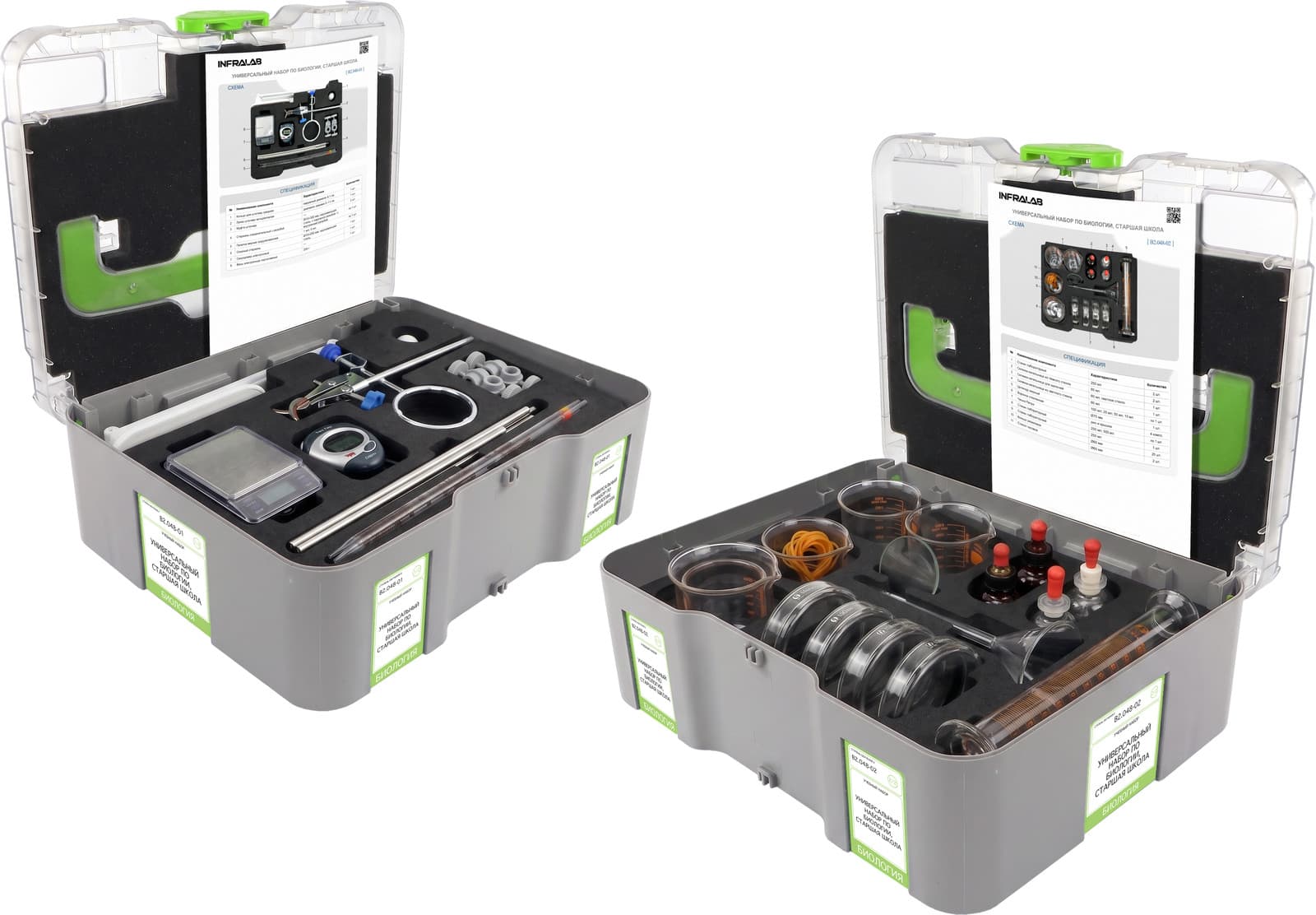
B2.048
Educational kit: General biology, upper secondary school
A universal set of laboratory ware, tools and equipment for the biology classroom in high school: 35 items in two cases, the basis for topic-specific sets.
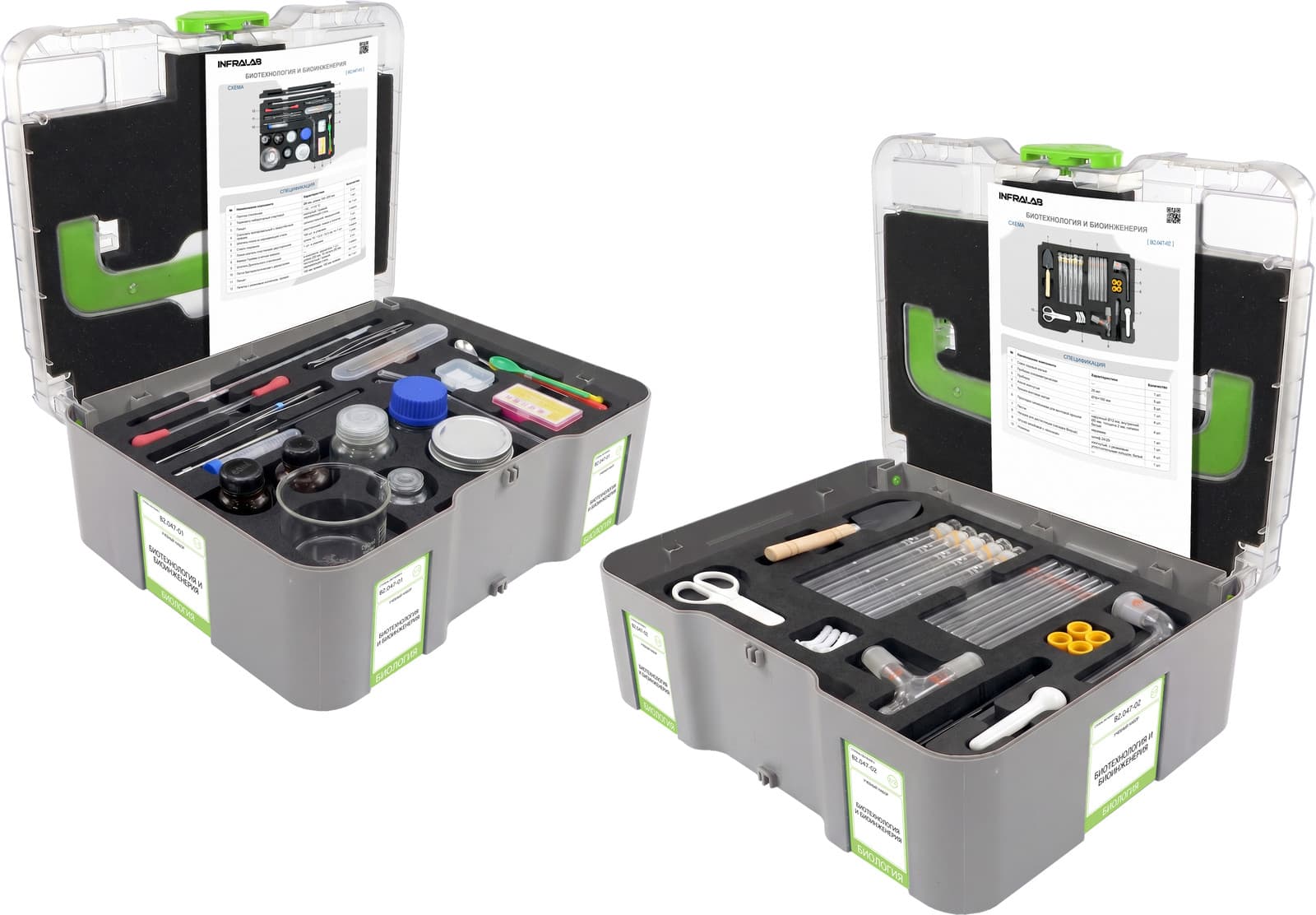
B2.047
Educational kit: Biotechnology and bioengineering
Laboratory set “Biotechnology and Bioengineering” for biology high school: 53 equipment items in two cases, 17 laboratory activities.
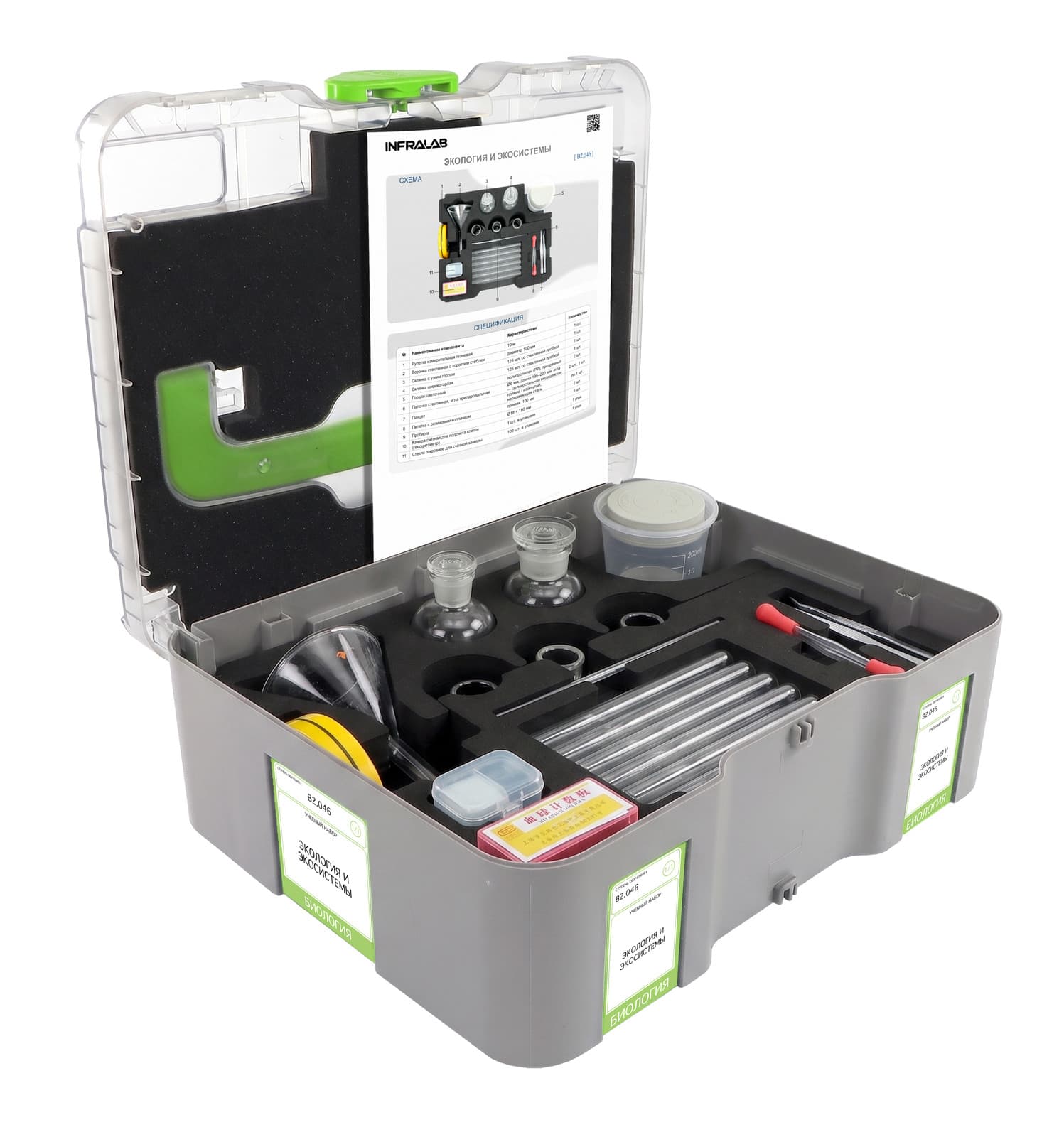
B2.046
Educational kit: Ecology and ecosystems
Laboratory set “Ecology and Ecosystems” for biology high school: 23 equipment items in a case, 5 laboratory activities.
Looking for other equipment?
Tell us which equipment you need and the quantities. We can help you choose suitable items and prepare a quotation.